Dielectric Coaxial Resonators (DR)
Microwave Dielectric Coaxial Resonators (DR) Introduction
Token coaxial resonators (DR) is the cornerstone of RF microwave communications
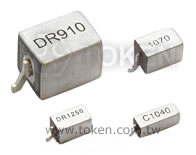
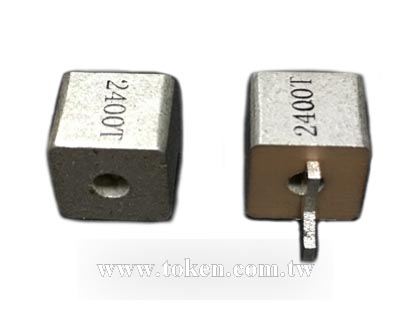
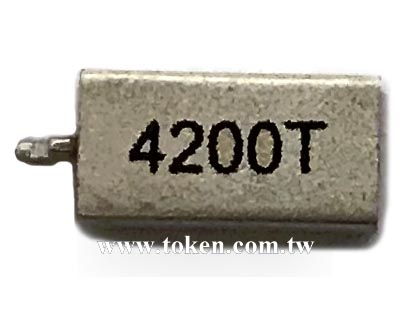
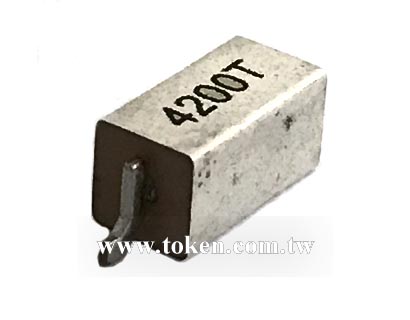
(DR) is a kind of microwave components, also known as ceramic resonator, Token electronics manufacturing dielectric resonator (cylindrical, ring), coaxial resonator (rectangular cavity, cylindrical cavity, coaxial cavity resonator), microwave resonator, etc. It is made high-Q dielectric ceramics, temperature coefficient is good, mainly used in microwave oscillators and filters.
Dielectric resonator size and dielectric material is inversely proportional to the square root of the dielectric constant, dielectric materials, dielectric constant the greater the required dielectric ceramic block the smaller, thus the smaller the resonator size. Another important parameter is the insertion loss, low dielectric loss microwave dielectric materials, dielectric filters that affect the insertion loss of a major factor. Microwave dielectric Q value and dielectric loss is inversely proportional to the relationship. Q value is greater the lower the filter insertion loss.
Therefore, the microwave dielectric ceramic materials of high dielectric constant is conducive to the miniaturization of microwave dielectric filters, can filter with the microwave tube, a microstrip line realization of microwave hybrid integrated circuit, so that the device dimensions to mm order of magnitude, the price is also much lower than the metallic cavity.
The (DR) impedance used in TEM mode is direct function of its dimensions and of the dielectric material permittivity. Token coaxial ceramic resonators provide the customers with high Q higher parallel resonant impedance and better temperature characteristics than inductor coils and associated lumped constant elements used in RF amplifiers and oscillators circuits. According to dielectric resonator frequency stabilization mechanism, using dielectric resonator stabilized FET oscillator frequency (also referred to DRO) can be classified into 4 types, namely, reflective, band-reject type, transmission type and feedback type.
(DR) series with two ports, depending on port different boundary conditions, in accordance with the basic structure of the resonator is divided into three types: half-wavelength type, quarter-wavelength type, and capacitive load type, each structure each with distinct characteristics. Token (DR) series features with small size, high temperature stability characteristics. Indirectly, (DR) series is suitable for a variety of microwave communications equipment, particularly suitable for PCS / PCN filters, base stations, radar detectors, satellite broadcast reception systems, military microwave facilities. Comply with RoHS standards.
Custom parts are available on request. Token will also produce devices outside these specifications to meet specific customer requirements, please contact our sales for more information.
Download Dielectric Coaxial Resonators (DR) PDF Datasheet .
- High quality factor.
- High dielectric constant.
- Low temperature coefficient.
- Wide range of resonant frequency.
- CDMA/PCS/WLL/IMT2000.
- Filters, Duplexer, Oscillators (DRO/VCO).
- Wireless headphone, wireless security system.
- 900MHz, 1.8GHz, 2.4GHz, 5.8GHz wireless phone.
Dimensions (Unit: mm) (DR)
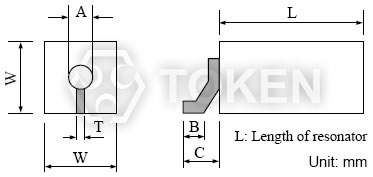
(DR) Dimensions |
|||||
| Part Number | W(O/D) | A(I/D) | B | C | T |
| DR120 | 12.0±0.2 | ① Φ4.0±0.2 | without tab | 3.2 | 1.0 |
| ② Φ3.55±0.2 | 1.5 | ||||
| DR100 | 10.0±0.2 | ① Φ3.3±0.2 | 1.3 | 3.0 | 1.0 |
| DR80 | 8.0±0.2 | ① Φ2.7±0.2 | 1.3 | 2.6 | 0.7 |
| DR60 | 6.0±0.2 | ① Φ2.5±0.2 | without tab | 2.4 | 0.7 |
| ② Φ2.2±0.2 | without tab | ||||
| ③ Φ2.0±0.2 | 1.2 | ||||
| DR50 | 5.0±0.2 | ① Φ1.8±0.2 | 1.0 | 2.2 | 0.6 |
| ② Φ1.5±0.2 | 1.0 | ||||
| DR40 | 4.0±0.1 | ① Φ1.8±0.1 | 0.8 | 1.8 | 0.6 |
| ② Φ1.5±0.1 | without tab | ||||
| ③ Φ1.2±0.1 | without tab | ||||
| DR30 | 3.0±0.1 | ① Φ1.0±0.1 | 0.7 | 1.5 | 0.5 |
| DR20 | 2.1±0.1 | ① Φ0.6±0.1 | 0.5 | 1.2 | 0.5 |
Available Range of TEM Mode (DR)
| Material | Dielectric Constant |
Tf [1] | Type | Characteristic Impedance (Ω) |
Wave Length |
Frequency Range (MHz) |
Q [2] (min) |
| A Series |
21±1 | 0±10 | DR120 | ①15 ②17 | λ/4 | 800~1300 | 800 |
| λ/2 | 1600~2700 | 1000 | |||||
| DR100 | 16 | λ/4 | 800~1300 | 700 | |||
| λ/2 | 1600~3200 | 800 | |||||
| DR80 | 15 | λ/4 | 1000~3200 | 650 | |||
| λ/2 | 2000~3000 | 700 | |||||
| DR60 | ①12 ②14 ③15 | λ/4 | 1000~2700 | 550 | |||
| λ/2 | 2000~3000 | 600 | |||||
| DR50 | ①14 ②17 | λ/4 | 1300~3000 | 450 | |||
| λ/2 | 2500~4000 | 500 | |||||
| DR40 | ①11 ②14 ③17 | λ/4 | 1300~4000 | 380 | |||
| λ/2 | 2500~4000 | 400 | |||||
| DR30 DR20 |
15 | λ/4 | 1900~4000 | 320 | |||
| 17 | λ/4 | 2800~5000 | 250 | ||||
| B Series |
36±1 | 0±10 | DR120 | ①12 ②13 | λ/4 | 600~1000 | 700 |
| λ/2 | 1200~2400 | 900 | |||||
| DR100 | 12 | λ/4 | 600~1200 | 600 | |||
| λ/2 | 1200~2400 | 800 | |||||
| DR80 | 12 | λ/4 | 800~1500 | 500 | |||
| λ/2 | 1600~3000 | 700 | |||||
| DR60 | ①10 ②11 ③12 | λ/4 | 800~1800 | 450 | |||
| λ/2 | 1600~3500 | 550 | |||||
| DR50 | ①11 ②13 | λ/4 | 800~1800 | 380 | |||
| λ/2 | 1600~3500 | 450 | |||||
| DR40 | ①9 ②11 ③13 | λ/4 | 1000~2700 | 320 | |||
| λ/2 | 2000~4800 | 400 | |||||
| DR30 DR20 |
12 | λ/4 | 1300~3000 | 220 | |||
| 13 | λ/4 | 1300~3000 | 220 | ||||
| C Series |
90±2 | 0±10 | DR120 | ①7 ②8 | λ/4 | 400~800 | 650 |
| λ/2 | 800~1500 | 700 | |||||
| DR100 | 7 | λ/4 | 600~800 | 550 | |||
| λ/2 | 1200~2400 | 650 | |||||
| DR80 | 7 | λ/4 | 440~1000 | 450 | |||
| λ/2 | 1000~1500 | 550 | |||||
| DR60 | ①6 ②7 ③7 | λ/4 | 440~1300 | 400 | |||
| λ/2 | 1000~2200 | 470 | |||||
| DR50 | ①7 ②8 | λ/4 | 500~1800 | 380 | |||
| λ/2 | 1000~3000 | 450 | |||||
| DR40 | ①6 ②7 ③8 | λ/4 | 900~1600 | 200 | |||
| λ/2 | 2000~4800 | 300 | |||||
| DR30 DR20 |
7 | λ/4 | 900~1600 | 250 | |||
| 8 | λ/4 | 900~1600 | 150 |
- Frequency stability of temperature.
- Q value depends on lower limit of frequency range.
Order Codes (DR)
| DR | 30 | A | 1 | W4 | 2533 | T | ||||||||||||||||||||||||
 |
|
|
|
|
|
|
||||||||||||||||||||||||
|
|
|
|
|
|
|
||||||||||||||||||||||||